9221 Harrison Ave, Cleves, OH
Based in Cincinnati, serving Ohio, Indiana, Kentucky, West Virginia and Illinois
The trash your business throws out is charged at the landfill rate. Recycling takes cardboard, paper and plastic out of your trash, so you are not paying the landfill rate on them. With less going in, your trash container fills slower and can need fewer pickups.
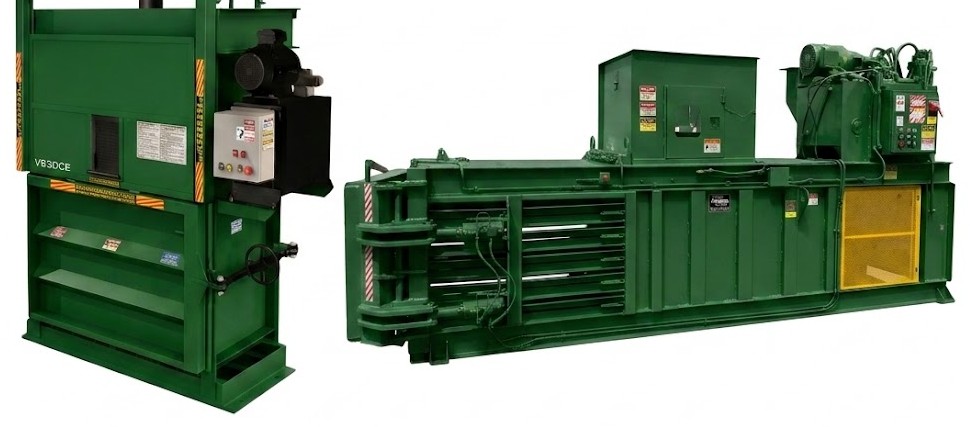
Before you commit, we look at a normal week of your trash to see if recycling saves you money. Everything recyclable goes in one container with no sorting, and it is picked up on your trash route. If it is mainly cardboard, a baler presses it into bales and cuts the number of pickups.
Once service starts, we tell you if trash shows up in the recycling, and what to change. A load with too much trash can be charged as trash. When your volume changes, we change the container or the schedule, and recycling and trash stay on one invoice.
Wheeled carts with an attached lid, for paper, bottles, cans and shipping boxes. The 65 gallon has a slim profile for tight spaces, and the 95 gallon holds more between pickups.
Sizes: 65 and 95 gallon
Deskside bins sit under or beside a desk for paper. Open-top bins have no lid to lift and a label for what goes in. Staff empty both into the main recycling container.
Best for: offices, grocery stores and busy retail floors

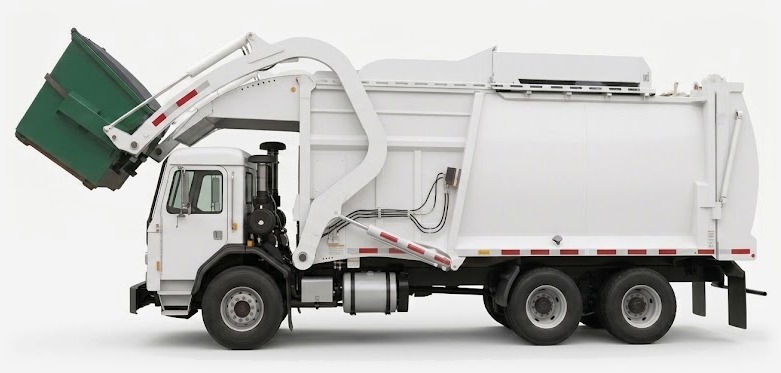
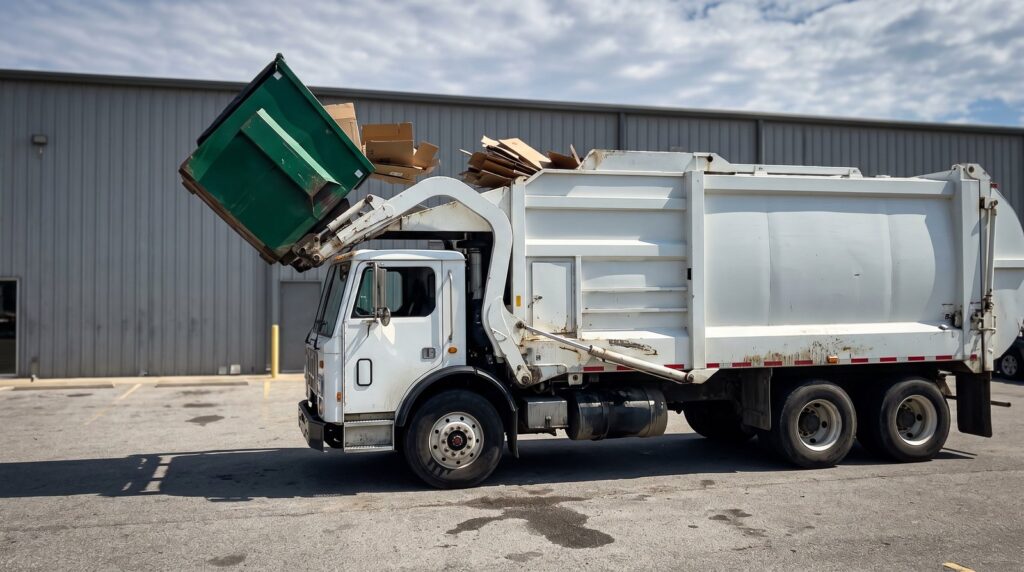
Emptied on the same route as your trash. Lock bars keep it closed between pickups, and it is built to stay outside all year. The 8 yard suits manufacturing plants and fulfillment centers.
Sizes: 6 and 8 yard
Corrugated boxes at least three layers thick, for large amounts of one material and heavy items like electronic scrap. They stack when full, fold flat when empty and can be reused.
Holds: up to 2,000 pounds
For bulky material in high volume, like metal parts, plastic containers and cardboard boxes. They suit construction sites, landscapers and industrial sites.
Holds: up to 30 cubic yards
You are adding a container, so there is a line for it. What usually happens alongside is that the general waste container fills slower and needs fewer pickups, and the material in the recycling container is not charged at the landfill rate. Whether it nets out cheaper depends on how much recyclable material you actually produce, which is what we work out before you commit.
No. Mixed-stream means cardboard, paper and plastics go in the same container and get sorted after collection.
Loose cardboard is mostly air, so it fills a container fast, and that is what drives the pickup frequency you are billed for. A baler crushes it into a dense bale. That cuts the volume, and above a certain amount of cardboard a bale becomes something you can sell rather than something you pay to remove.
There is a volume below which a baler does not pay for itself and a separate cardboard container is the better answer. Tell us roughly how much cardboard you go through and we will tell you which side of that line you are on.
Yes. Same account, same invoice, and one number to call about either.
A load with too much general waste in it can be rejected and charged as trash. If that is happening we will tell you where it is coming from and what to change, whether that is signage, container placement or a different collection point.
Tell us what your business produces and how much of it. We will tell you what is worth separating and what it changes on the invoice, then come back with a price.