9221 Harrison Ave, Cleves, OH
Based in Cincinnati, serving Ohio, Indiana, Kentucky, West Virginia and Illinois
Three things decide your service: how much you produce, how big the container is, and how often the truck comes. When the three match, the container is close to full at each pickup and nothing overflows between them.
We start with what your business does and what it throws out each week. Cardboard fills a container fastest, so we move it into a recycling container on the same route. The trash container is then sized to what is left, and pickups run once a week or more. Where the volume is high, a compactor or baler cuts the number of pickups.
Once service starts, call us when you need an extra pickup or want your container moved. If your business starts producing more or less, we change the container size or the schedule to match. Every location is sized on its own, and trash and recycling for all of them come on one invoice.
Wheeled carts that fit a small storage space, for trash or for recycling.
Sizes: 65 and 95 gallon
Disposable corrugated containers for office buildings and events. Easy to store, and easy to set out where you need them.
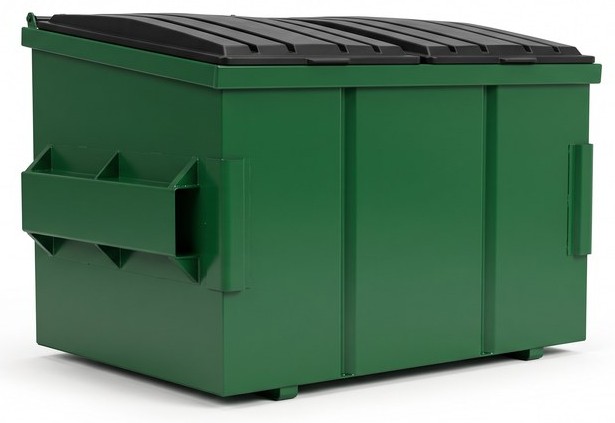
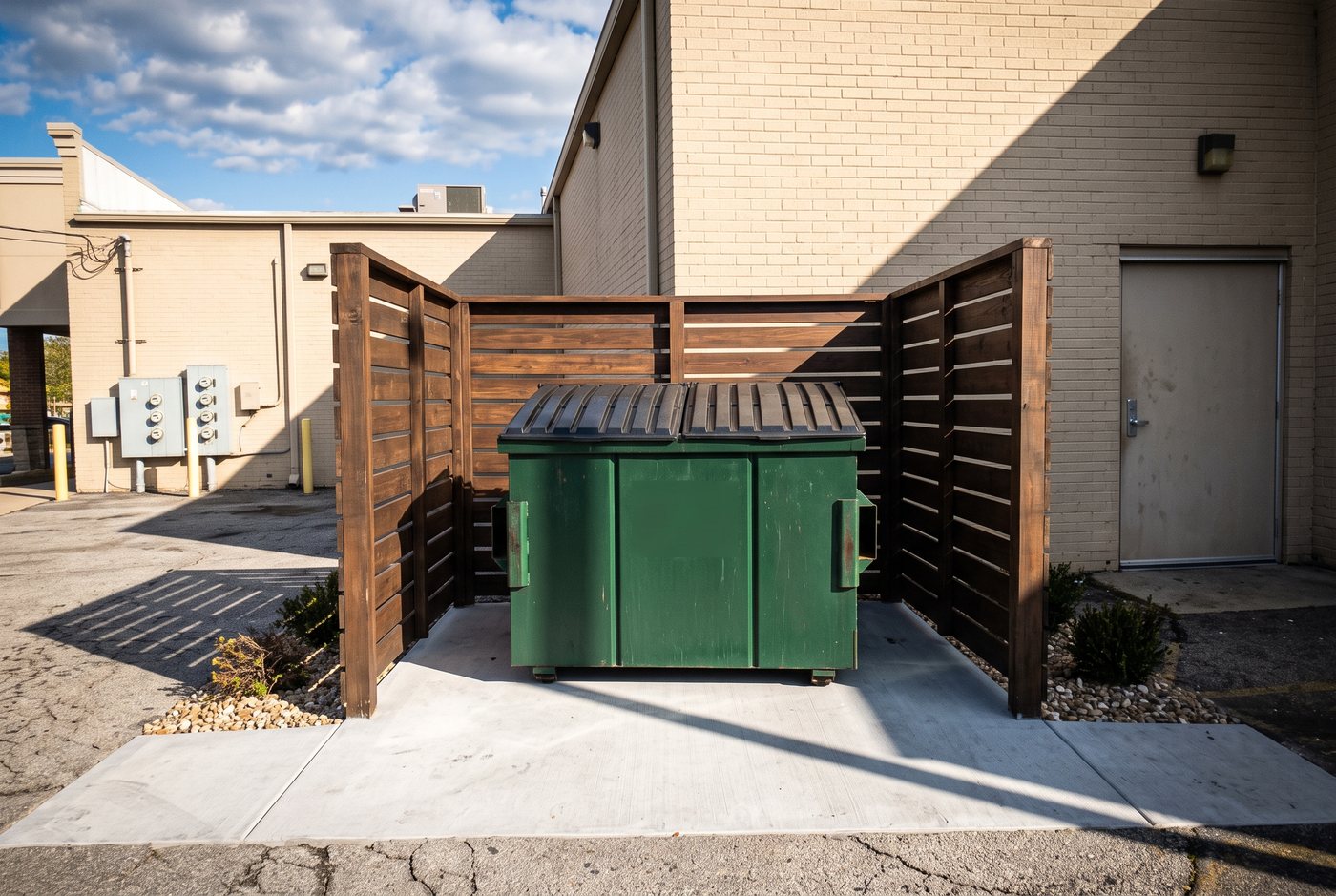
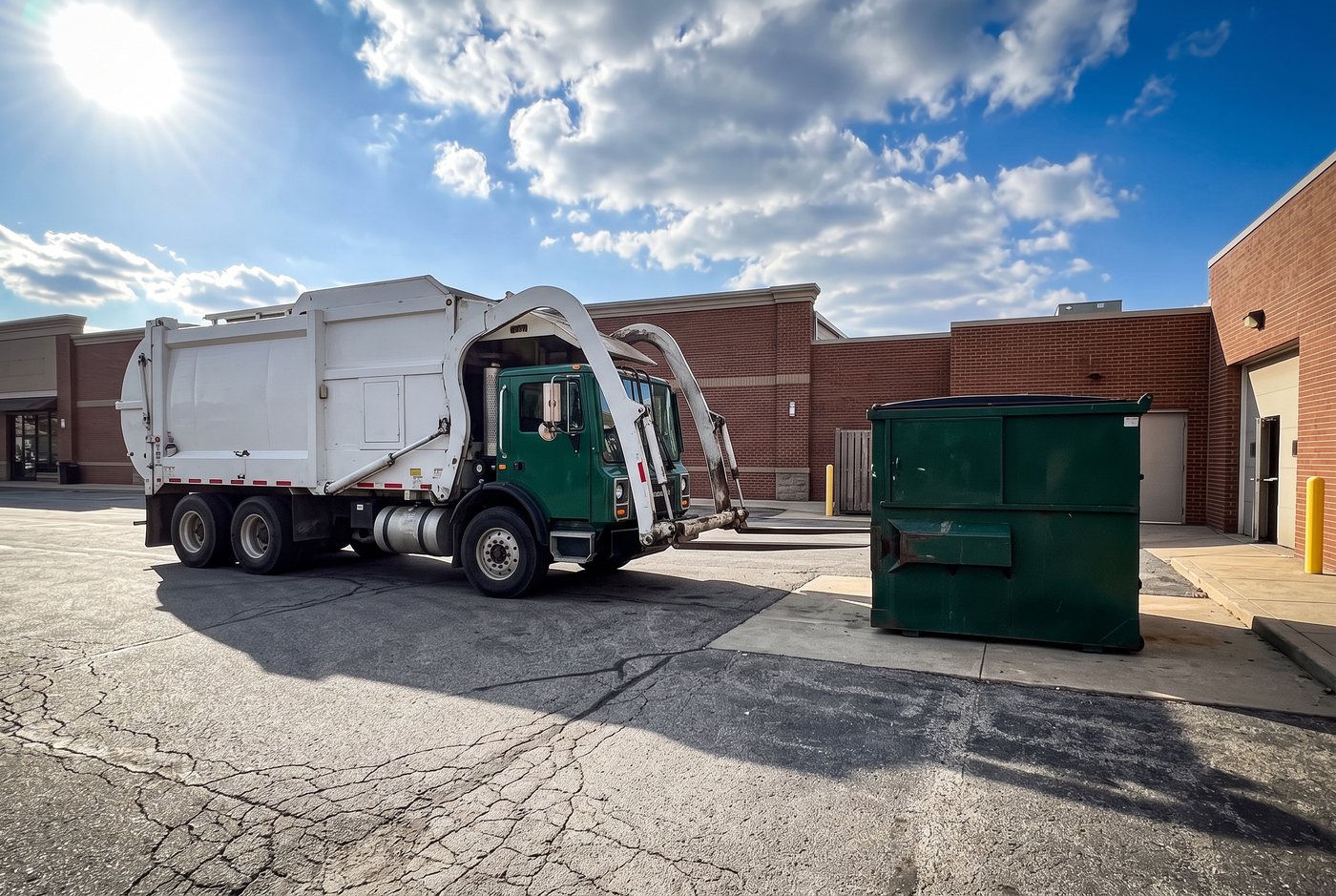
The permanent container behind the building. The default for many businesses.
Sizes: 2, 4, 6 and 8 yard
Styles: flat, slant or dock
Material: plastic or steel
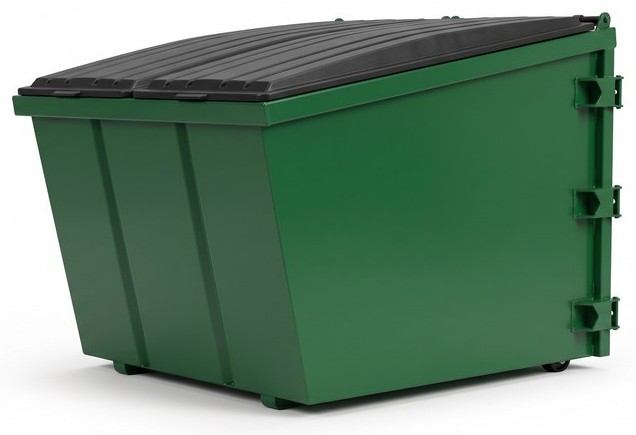
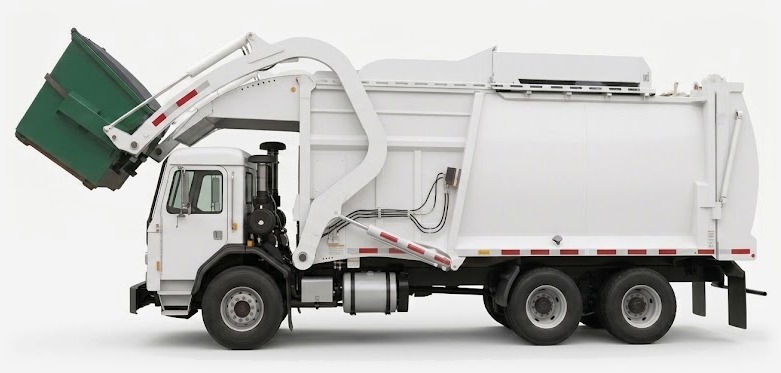
Emptied from the back rather than over the cab, for when a front load truck cannot get the clearance or the approach it needs.
Sizes: 2, 3, 4, 6 and 8 yard
Styles: standard or high back
Material: plastic or steel

Crush trash so the same space holds more and gets picked up far less often. See commercial compactors.
Types: self-contained, stationary, vertical, apartment, pre-crusher and auger
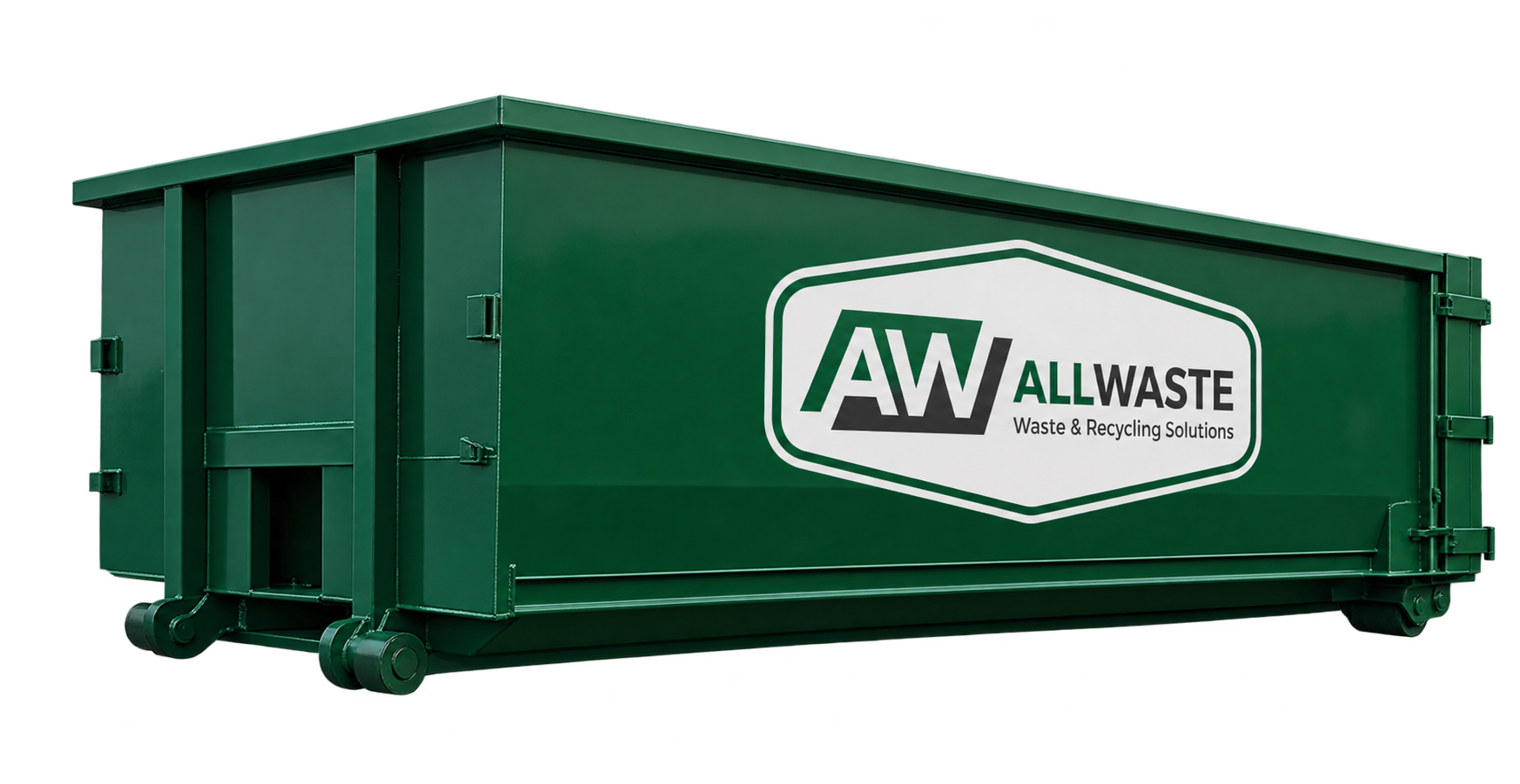
Open-top containers for high volume and for cleanouts, renovation, demolition and construction debris. See commercial dumpster rental.
Sizes: 10, 15, 20, 30 and 40 yard
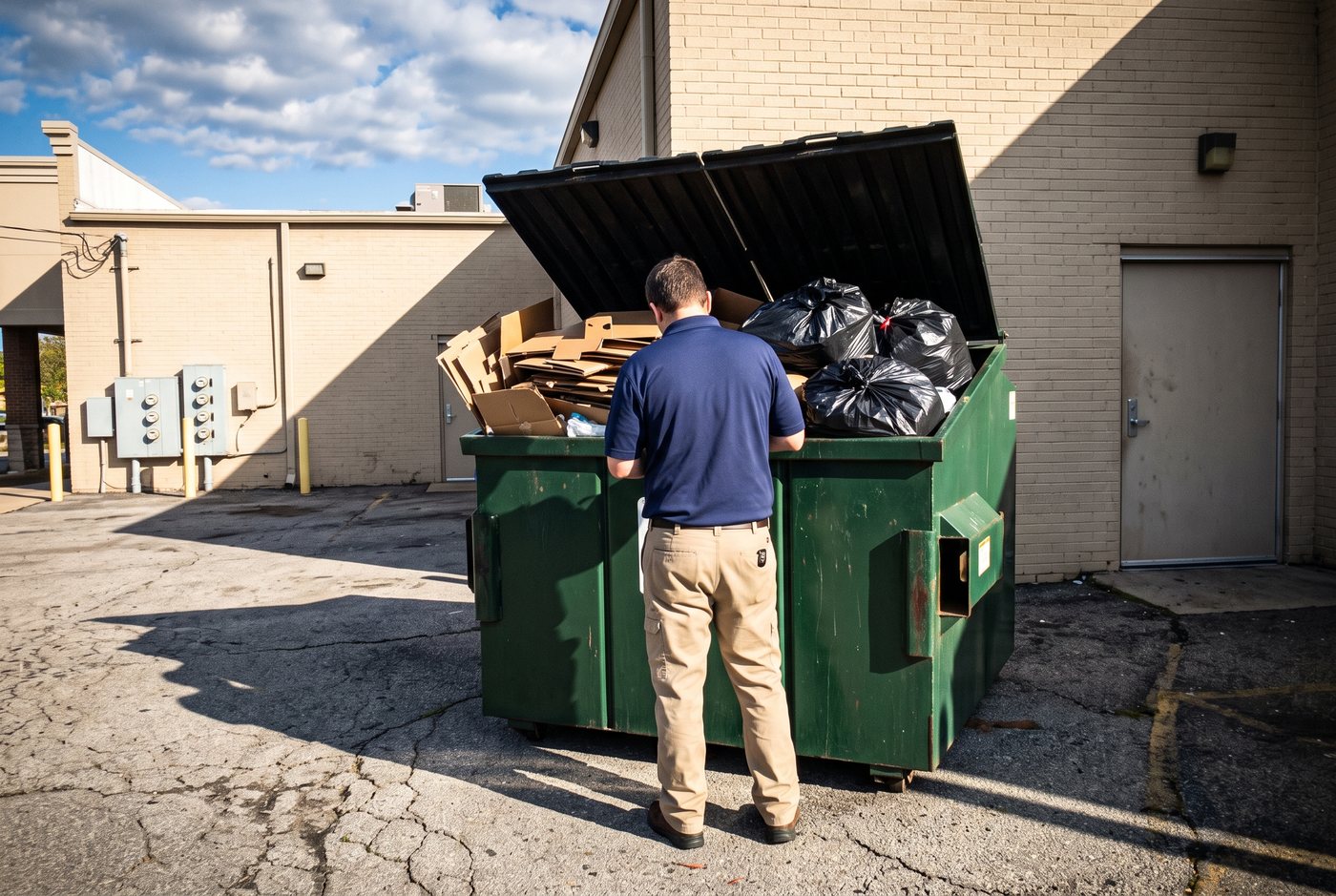
What the business produces and what is in it. Cardboard, packaging and food waste each need a different container. If you already have service, send a recent invoice and we read it against your contract.
We agree the container, the schedule and the rate with the provider, and handle the paperwork. The only thing you sign up front is a letter that lets us deal with your vendors for you.
The container arrives on the agreed day and collection runs from there. Your first invoice comes from us, and so does everything after it.
We arrange the collection through a service provider and hold that contract ourselves. You deal with us for everything.
One, from us. Trash and recycling on the same invoice, and the same again across multiple locations.
Once a week is where many commercial accounts start, with extra days added from there. A busy restaurant or a full apartment block often runs two or three days a week.
Three numbers set the schedule and they only work together: how much waste the site produces, how big the container is, and how often it gets emptied. Settle any two and the third follows, which is why frequency is never quoted on its own.
Being wrong costs money in both directions. Too few pickups and the container overflows, which comes back as overflow charges and bags stacked beside it. Too many and you are paying for a truck to lift a half-empty container. A common find on an invoice is a size and a frequency that fit the business two years ago and were never revisited.
Industry is shorthand for how much a site produces. A restaurant, a grocery or a full apartment block produces far more per square foot than an office, so it fills the same container quicker.
It is only shorthand though. Two restaurants on the same street can sit on different schedules depending on covers, on whether they break their own cardboard down, and on how much of what they throw out is packaging.
Fewer pickups on the same waste is usually the cleanest saving available, because it lowers the bill without changing how the business runs. There are three ways to get there.
Working out which of the three applies is what the invoice review is for. Send a recent bill and we will look at the container, the frequency and the rate together. See waste audits.
Tell us and we change the container size or the schedule. A common find on an invoice is a size and a frequency that stopped fitting the business a while ago.
Then a bill review is the better route. We read the invoice against your contract, fix what we find, and you can keep your existing hauler.
Tell us the address, what the business does and what you throw out, or send a recent invoice if you already have service. We come back with a price and set the service up.