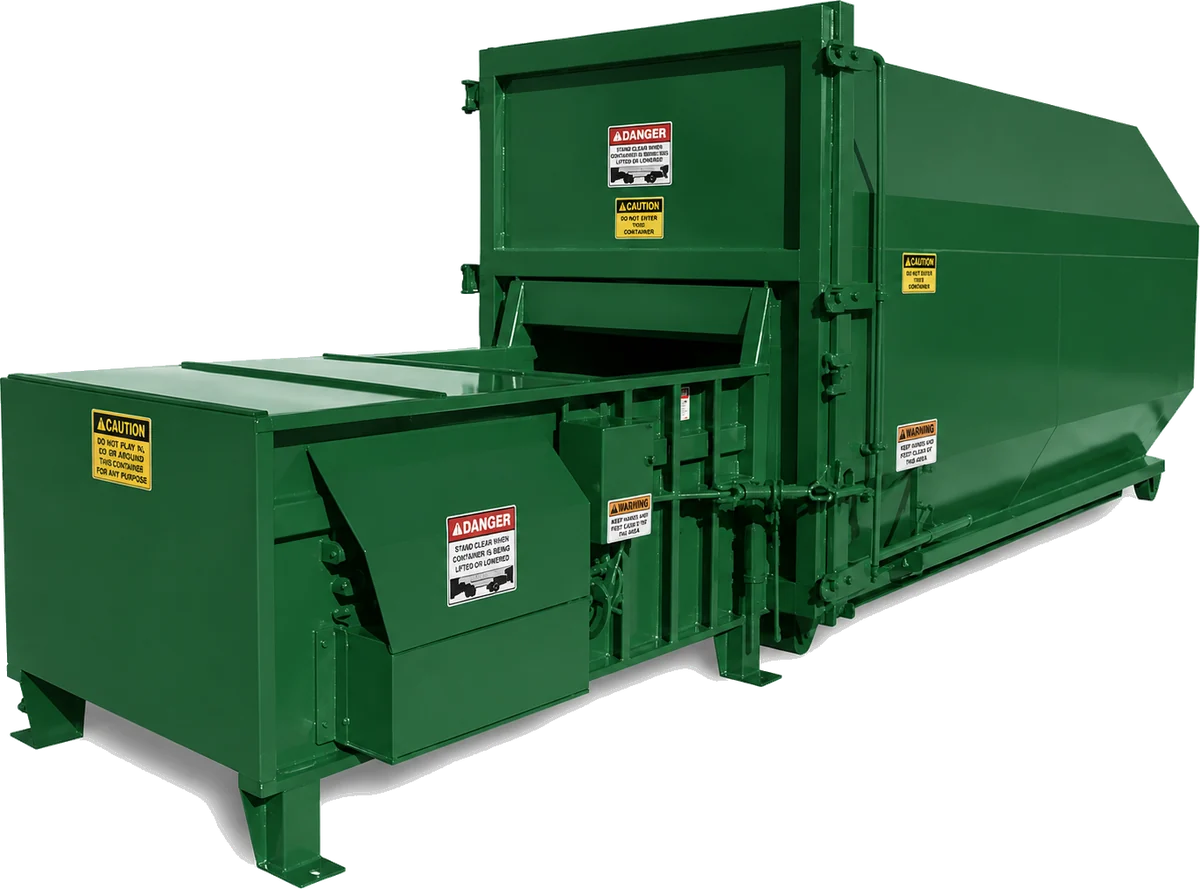
Based in Cincinnati, serving Ohio, Indiana, Kentucky, West Virginia and Illinois
An industrial trash compactor, also called a commercial trash compactor, squeezes the air out of loose cardboard, packaging and trash. The container fills slower, so it needs fewer pickups, and the waste stays closed in against smell and pests. Your trash bill is set by how often the truck comes, more than by what your waste weighs. So fewer pickups mean you pay less.
Cardboard is its own decision. A cardboard compactor crushes boxes into a sealed container that is hauled like any other load, which suits a site that puts out a steady trickle of boxes mixed in with the rest of its trash. If your cardboard is clean and there is enough of it, a cardboard baler presses bales you can sell instead of pay to haul. We price both and tell you which one pays back faster at your volume.
You can buy a compactor outright, and we spec it to your waste and space. Or we set one up as part of your service, on one account with your waste and recycling. We also arrange service and repair, including on units already on site when we take over an account.
We start with what your waste is and how much room you have. Wet or food waste goes in a sealed self-contained unit, and dry waste goes in a stationary one. Apartment buildings use a small unit under the trash chute. Vertical units, pre-crushers and augers cover tight spaces, bulky loads and nonstop volume.
Self-contained and stationary units can add a side or rear hopper, a chute through your wall, or a dock enclosure. If your volume is too low for a compactor to pay for itself, we will tell you.
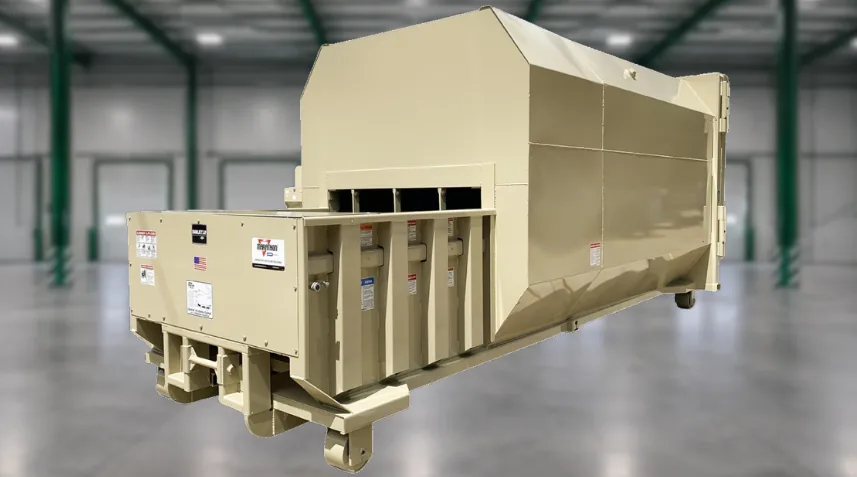
Typical sizes: 21 to 39 cubic yards, with a 2 yard charge box
Best for: Wet and food waste at restaurants, grocery stores, hotels and hospitals
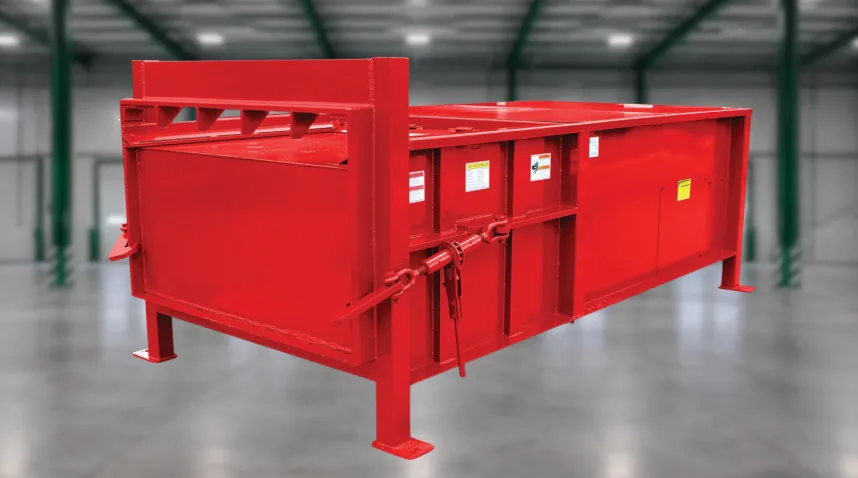
Typical sizes: 2, 3 or 4 yard charge box
Best for: Dry waste and cardboard at retail stores, warehouses and distribution centers
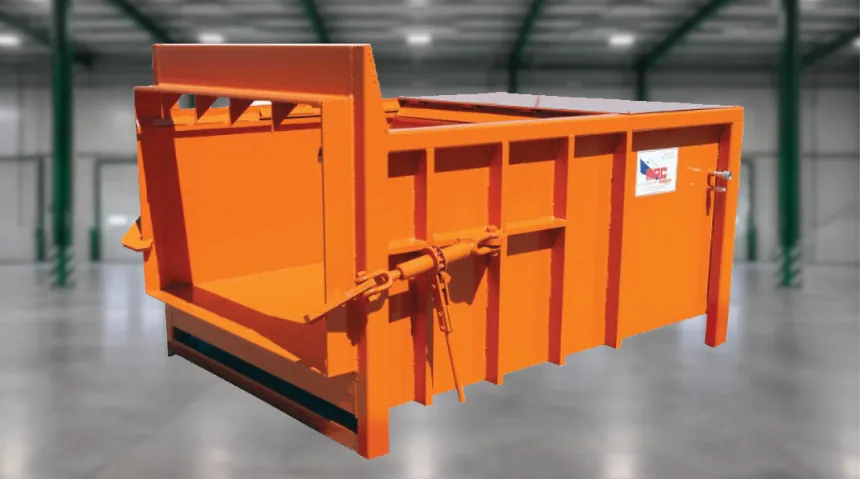
Typical sizes: 2 or 2.5 yard charge box, up to 40% shorter
Best for: Docks and back rooms too short for a standard unit
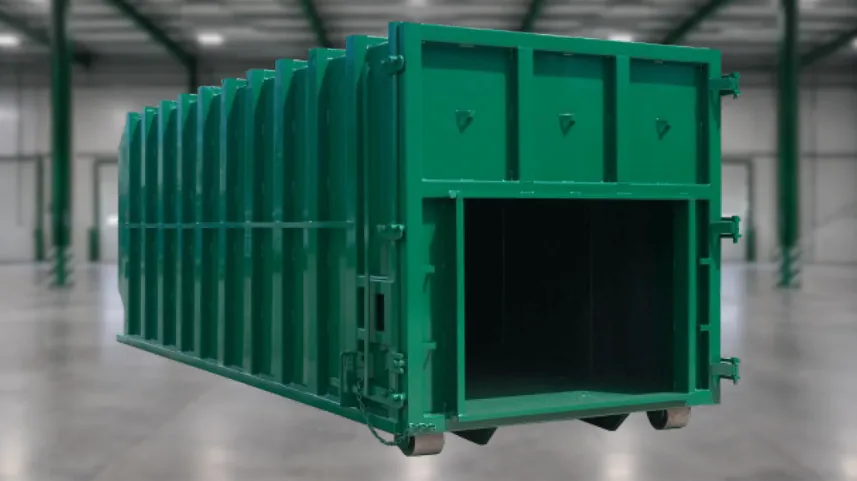
Typical sizes: 28 to 42 cubic yards, rectangular or octagon
Best for: Pairing with a stationary compactor, as the box that fills and gets hauled
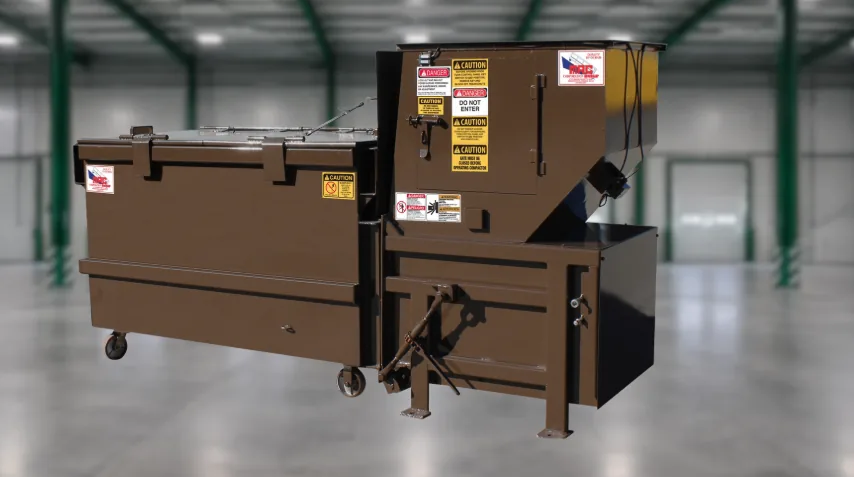
Typical sizes: Packs into a 2 yard front load container
Best for: Apartment and high-rise buildings, under the trash chute

Typical sizes: 4, 6 or 8 yard
Best for: Tight spots like alleys and docks, at fast food and small retail
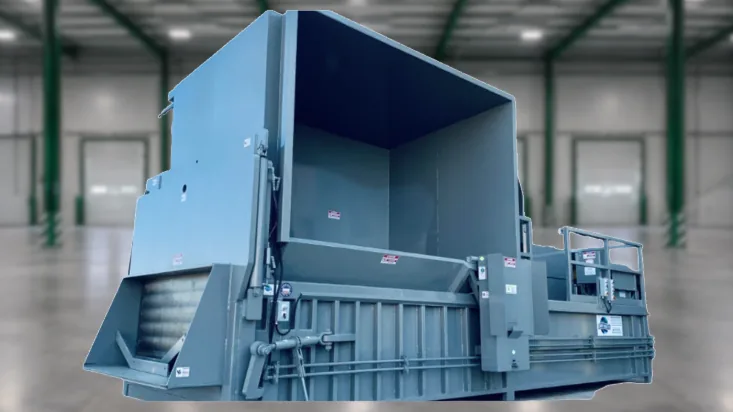
Typical sizes: 2.9 or 4.15 yard charge box
Best for: Pallets, drums, furniture and large metal goods on manufacturing and industrial sites

Best for: Steady volumes of cardboard, pallets and furniture at plants and distribution centers
Pick a type if you know it, and we will size the unit to your waste and space.


Have used Hawk for commercial and residential jobs. All the drivers are professional, dumpsters were placed exactly where requested, and dumpsters were picked up on time when the job was done. Prices are better than the bigger companies as well. Vince, the owner, is a great guy and I couldn’t recommend using this company enough.


Vince is so friendly and professional to work with. Would use them again and recommend them to everybody I know


Excellent service! Highly recommend!


Great company. Great service. 10 of 10 would highly recommend..


Great company! Very easy to work with, reliable, and professional. Would use again


Hawk Waste solutions did such an amazing job and they’re so affordable. They delivered a dumpster and helped us clear so much junk from our house. Thank you!


Prompt! Efficient! Reasonable prices and VERY user-friendly! Highly recommend you call for estimate. You will be pleasantly surprised.


Vince and his team are great! Professional and did the job right! Highly recommend Vince and the team!


Recommend!!!! Easy to work with.
Dumpster came on time and was picked up on time for the price I was promised.


I've worked with Vince for years. All I do is text what I need and where and it's done! Great Service.


Awesome Service, Very professional, Will definitely use them again.


Great company, highly recommend and reliable!!!!


Fantastic waste recycling service
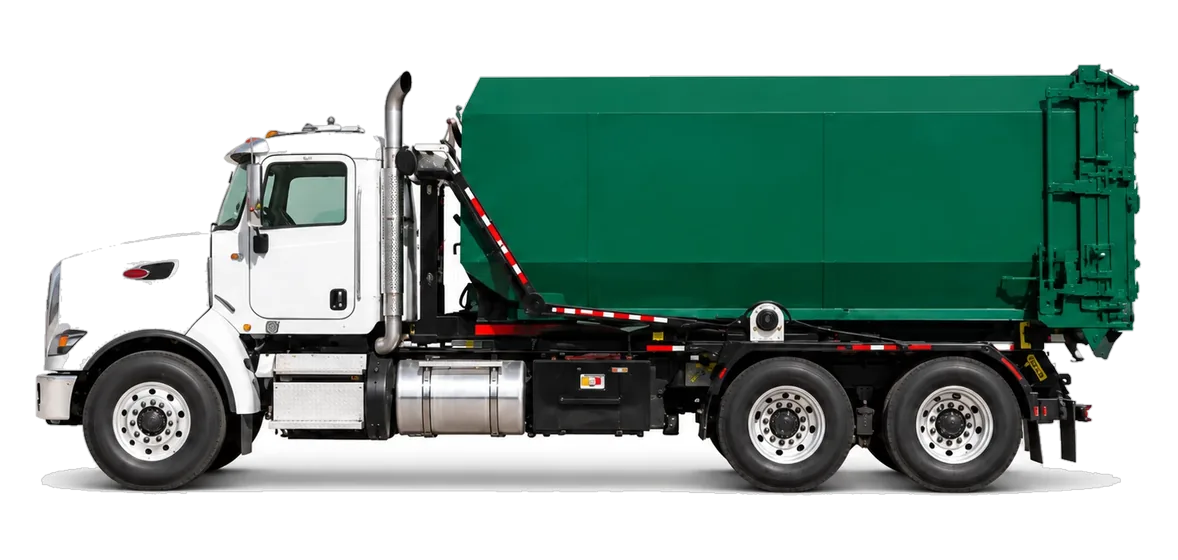
It comes down to three things: what the waste is, how much room you have, and how much of it there is.
If the space is tight, a short-body stationary unit or a vertical compactor fits where a full-length unit will not. In an apartment building, a small unit sits under the trash chute. For bulky loads or nonstop volume, a pre-crusher or an auger crushes the material as it packs it.
A self-contained unit is one sealed piece and the whole thing is hauled away to be emptied, which makes it the one for wet and food waste. A stationary unit has a charge box that stays bolted down and compacts into a separate receiver box, and only that box leaves. Stationary is for dry waste.
Both. We sell them outright, and we also place them as part of a managed waste and recycling account. Which costs less depends on how long you will be in the building and how much you produce.
We arrange it. Call us when a unit goes down and we line up the service call with the people who maintain that equipment, for compactors we supplied and for units already on site when we take over an account.
What you pay depends on how you got the machine. On a rental, service is included. On a lease it is usually included, often for a set number of years. On a purchase it is normally covered for the first twelve months, and after that you pay for the call and the parts.
Call us and we will get it looked at. A compactor that stops means waste backing up inside the building, so it does not wait.
Most of the range runs on 208, 230 or 460 volt three-phase. Two of the smaller units are also available in 220 to 230 volt single phase.
Tell us what you already have at the site and we spec the machine to it. Bringing in three-phase where there is none is usually more expensive than picking a different unit.
They run from about 6 feet long for the smallest stationary unit to about 25 feet for the largest self-contained, and stand around 8 ft 6 in tall. The loading height is 44 inches on most.
A self-contained sits outside on a level pad. A stationary needs the same pad plus room for the container behind it, and both need clear space for the truck to hook and pull.
Six to eight weeks is normal for a new machine. We confirm the lead time when we quote, and we will tell you if a different model gets you there sooner.
Tell us what you throw out, how much of it, and what space you have. We will tell you whether a compactor pays for itself.