Based in Cincinnati, serving Ohio, Indiana, Kentucky, West Virginia and Illinois
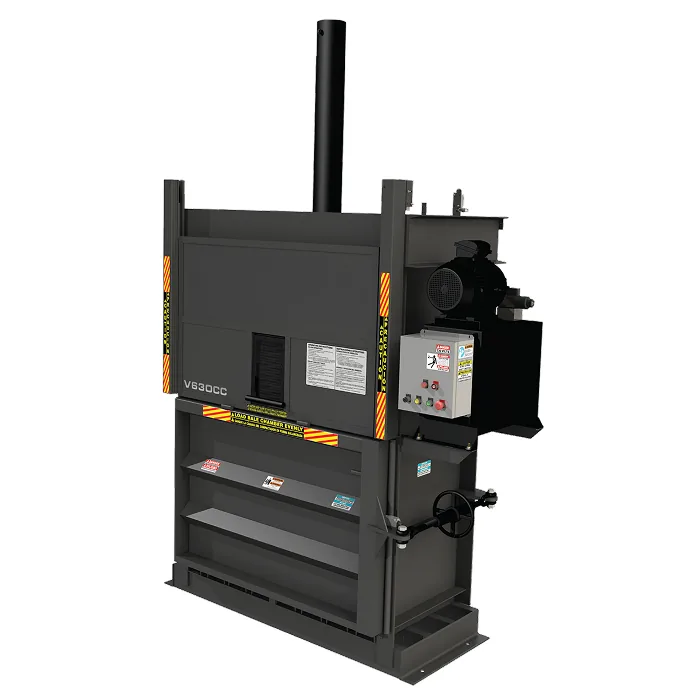
A cardboard baler presses broken-down boxes into dense bales that you store until they are picked up. Some people call it a cardboard compactor, but a compactor crushes boxes into a container that gets hauled away. Without a baler, boxes pile up with every delivery, and loose cardboard fills a container long before it gets heavy. You pay for fewer cardboard pickups, and once there are enough bales, they can be sold.
Stores, warehouses and distribution centers generally use a vertical baler. Large factories with conveyor-fed lines use a horizontal baler. We match the machine to your weekly cardboard and the floor space available. When your cardboard would not cover the cost of a baler, we set up a cardboard recycling container.
We sell balers if you want to own one. We can also place a baler with your service, on the same bill as your waste and recycling.
Two types cover commercial cardboard. Which one fits comes down to how much cardboard you go through and the room you have.
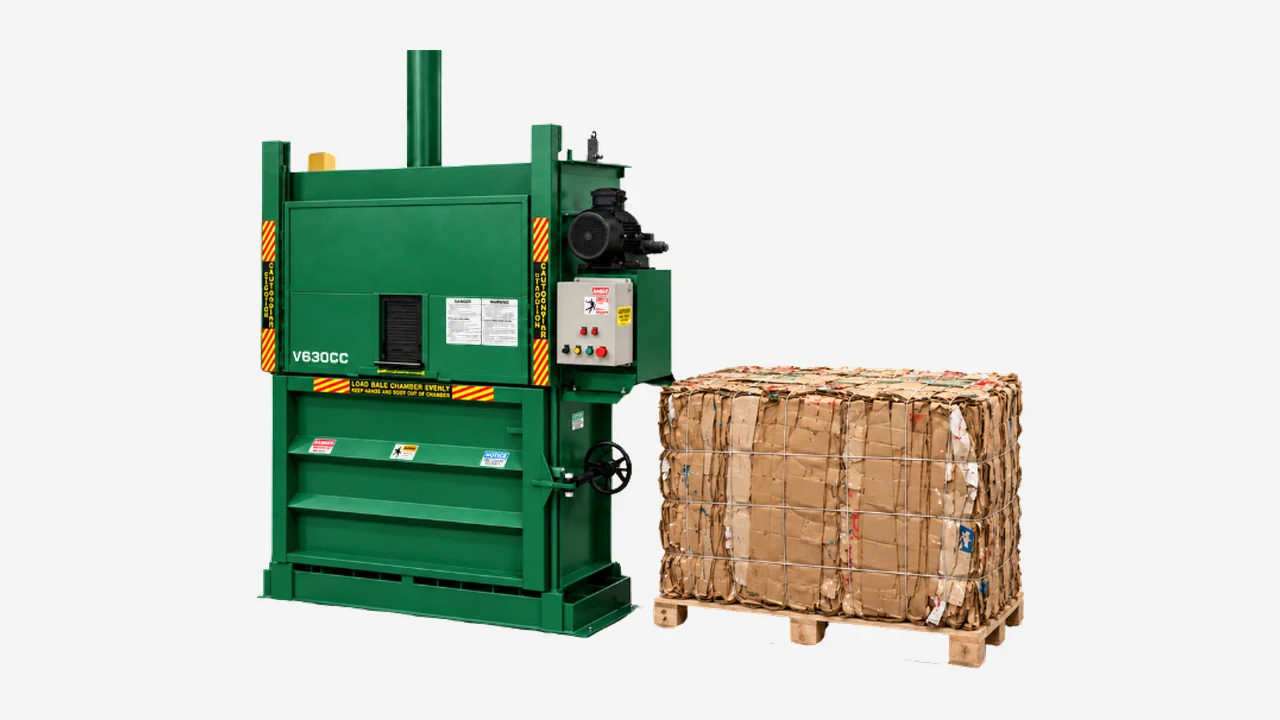
Best for: Almost every commercial site. Retail, warehouses, distribution and back of house.
Takes: Cardboard, shrink wrap, plastic film and aluminum cans.
Most businesses end up with a vertical baler, and it comes in several sizes. Tell us your cardboard volume and the space you have, and we will pick one.

Best for: Major factories and plants running cardboard through the whole shift.
Takes: Cardboard, paper, plastic and aluminum, usually fed by a conveyor. Up to 25 tons an hour, depending on the material and model.
A horizontal baler is built for continuous volume and takes considerably more floor space. Few commercial sites need one.
Pick a type if you know it, and we will match the baler to your cardboard and floor space.


Have used Hawk for commercial and residential jobs. All the drivers are professional, dumpsters were placed exactly where requested, and dumpsters were picked up on time when the job was done. Prices are better than the bigger companies as well. Vince, the owner, is a great guy and I couldn’t recommend using this company enough.


Vince is so friendly and professional to work with. Would use them again and recommend them to everybody I know


Excellent service! Highly recommend!


Great company. Great service. 10 of 10 would highly recommend..


Great company! Very easy to work with, reliable, and professional. Would use again


Hawk Waste solutions did such an amazing job and they’re so affordable. They delivered a dumpster and helped us clear so much junk from our house. Thank you!


Prompt! Efficient! Reasonable prices and VERY user-friendly! Highly recommend you call for estimate. You will be pleasantly surprised.


Vince and his team are great! Professional and did the job right! Highly recommend Vince and the team!


Recommend!!!! Easy to work with.
Dumpster came on time and was picked up on time for the price I was promised.


I've worked with Vince for years. All I do is text what I need and where and it's done! Great Service.


Awesome Service, Very professional, Will definitely use them again.


Great company, highly recommend and reliable!!!!


Fantastic waste recycling service
It comes down to three things: how much cardboard you go through, what it costs you now, and the space you have.
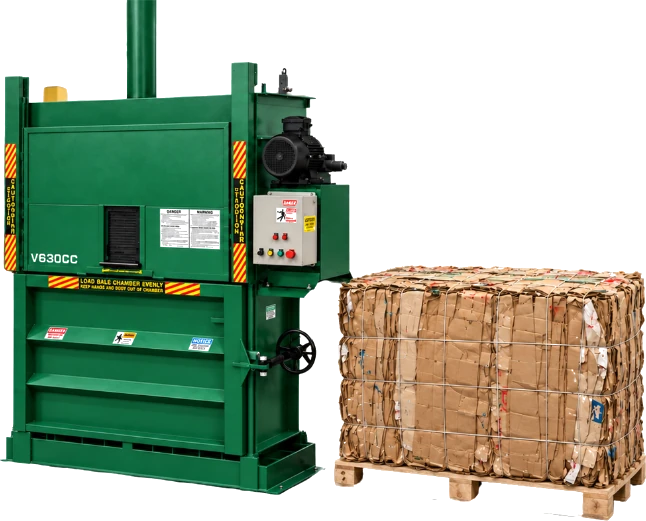
A baler starts to pay when you make enough bales to fill a truckload, which is 20 tons. An average bale runs 1,000 to 1,200 pounds, so that is roughly 35 to 40 bales. Below that, a separate cardboard container is usually the better answer. Tell us how much cardboard you go through. We will tell you which side of that line you are on. Sometimes the answer is that you do not need a baler at all.
A vertical baler is loaded by hand and suits almost every commercial site. A horizontal baler is usually fed by a conveyor and suits factories with nonstop volume.
If you are not sure which fits, tell us how much cardboard you go through and the room you have.
Once you are making truckload quantities, baled cardboard becomes something you can sell. Below that, the saving comes from fewer pickups instead.
What a bale is worth moves with the commodity market. Old corrugated peaked near $180 a ton in 2017 and 2021. In September 2026 it was closer to $85 a ton. A broker pays roughly $30 to $40 a ton under the index, depending on your volume. Bales are stacked off your dock into a trailer until there is a full load. Some sites stage them for collection by flatbed instead.
Both. We sell balers outright if you would rather own the machine, and we can arrange one as part of a managed waste and recycling account so it sits on a single bill. Which costs less depends on how long you will be in the building and how much cardboard you produce.
It depends how you got it. On a rental, service is included. On a lease it is usually included, often for a set number of years. On a purchase it is normally covered for the first twelve months, and after that you pay for the call and the parts.
Either way you call us, and we line up the service with the people who maintain that machine.
Yes, on the vertical balers we place. They run on 208, 230 or 480 volt three-phase.
Tell us what is at the site before anything is ordered. If there is no three-phase, a cardboard container on its own route is usually the better answer than paying for the power.
A vertical baler is roughly 7 to 8 ft wide and about 3 ft 6 in to 3 ft 10 in deep, and it stands 8 ft 6 in to 11 ft 7 in tall, so check the ceiling as well as the floor.
The number people miss is the door. With it open you need 8 to 9 ft of clear depth in front of the machine. You also need somewhere to stack finished bales until they are collected, and a pallet jack path out to the dock.
Tell us how much cardboard you go through in a normal week and how much floor space you can give up. We will tell you whether a baler pays for itself.